Biocracked
←

#golden oyster mushroom

1 article
Approach: macro science (with a conceptual split). Palette: D, bold color field.

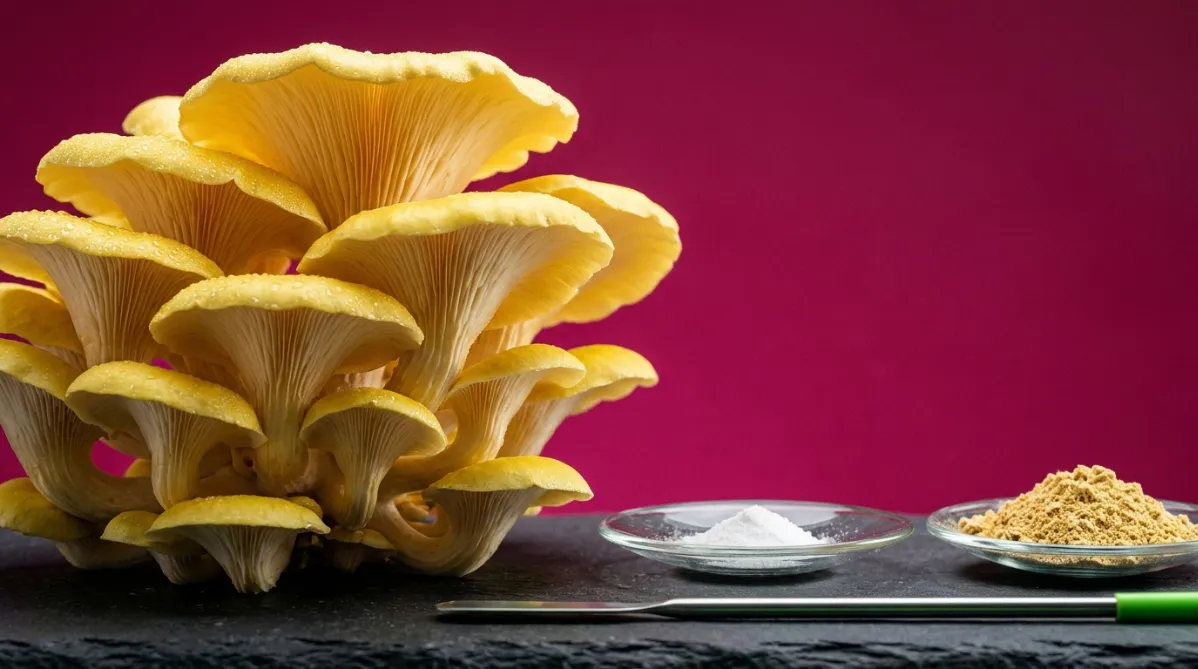
Extreme close-up photograph of a cluster of golden oyster mushrooms (Tamogitake), their ruffled, canary-yellow caps and fine gill structures sharply detailed, shot at a slight low three-quarter angle against a saturated magenta backdrop. In the foreground, a small glass watch dish holds a pinch of fine white crystalline powder, the isolated compound, sitting plain and inert beside a heap of fawn-yellow dried mushroom powder in a second dish. Soft directional studio light from the upper left gives the caps a translucent glow and creates crisp, short shadows. Tiny dew-like droplets cling to the gills. A single thin electric green stem of a lab spatula glints at the edge of the frame. Mood: curious, vivid, quietly skeptical, with the mushroom clearly outshining the isolate. No text or labels.
research

Ten grzyb zmniejszył tłuszcz w wątrobie u gryzoni – jego „gwiezdna” cząsteczka nie

BY NOVA CHEN ·

Ergothioneina jest związkiem, któremu przypisuje się wszystkie zdrowotne zalety grzybów, ale najnowsze badanie na szczurach i myszach komplikuje tę historię. Szczury i otyłe myszy karmione proszkiem złotego małża (Tamogitake) miały niższy poziom cholesterolu i trójglicerydów w wątrobie, natomiast podanie czystej ergothioneiny nie przyniosło takiego efektu. Grzyb wykazywał także tendencję do zwiększania wydalania cholesterolu i wolnych kwasów tłuszczowych w kale, czego nie zaobserwowano przy podawaniu izolatu. Autorzy wnioskują, że korzyści nie mogą być przypisane wyłącznie ergothioneinie. Badania ograniczono do gryzoni, a grzyb stanowił aż 5 % diety zwierząt, więc nie zamieniaj kontroli wątroby na smażone warzywa.

This page is available in